John Chapter 7: Living Water and the Division Over Christ

John Chapter 7 shows Jesus going to Jerusalem during the Feast of Booths.
The chapter is full of division. Some think Jesus is good. Others think He is leading people astray. Some want to arrest Him. Others wonder if He might be the Christ.
That is one of John’s repeated themes: the same Jesus is placed before many people, but not everyone sees Him rightly.
This connects with John Ch6, where many followed Jesus for bread, but turned back when His teaching became hard. In John 7, the division continues.
Jesus at the Feast of Booths
At the beginning of the chapter, Jesus’ brothers tell Him to go to Judea and show Himself openly.
John says even His brothers did not believe in Him.
That matters.
They were near Jesus physically, but they did not yet see Him rightly. They wanted a public display. Jesus was moving according to the Father’s timing.
Then Jesus says:
“The world cannot hate you, but it hates me because I testify about it that its works are evil.”
Jesus is not saying every individual act in the world is as evil as it could possibly be. He is saying that the fallen world is opposed to God. Its works are marked by unbelief, pride, self-rule, false worship, and sin.
The world does not hate Jesus because He is cruel.
The world hates Him because He tells the truth.
He exposes what people would rather keep hidden.
That connects with John Ch3, where Jesus says people loved darkness rather than light because their works were evil. Christ is the light, and light exposes.
From a Christian Reformed lens, this reminds us that human nature is not spiritually neutral. Apart from grace, the human heart resists God’s truth. Jesus does not merely improve the world’s self-esteem. He exposes sin so that sinners may come to Him for life.
My Teaching Is from Him Who Sent Me
When Jesus goes to the feast, He teaches in the temple.
The people marvel because He teaches with authority, even though He did not study under the normal rabbinic system.
Jesus answers that His teaching is not His own, but from the One who sent Him.
That does not mean Jesus lacks authority. It means He is perfectly united with the Father. He is not seeking His own glory apart from the Father. He speaks the Father’s truth.
Then Jesus says:
“Has not Moses given you the law? Yet none of you keeps the law. Why do you seek to kill me?”
This is a serious accusation.
They claimed to honor Moses, but they were plotting murder. The Law clearly forbids murder. More broadly, the Law teaches justice, mercy, truth, and love for God. Their desire to kill Jesus shows that they are not truly keeping the Law they claim to defend.
This connects with John Ch5, where Jesus says Moses will accuse them because Moses wrote about Him. They claimed Moses, but rejected the One Moses pointed toward.
Jesus then brings up circumcision and the Sabbath. If they permit circumcision on the Sabbath so that the Law of Moses is not broken, why are they angry that Jesus healed a whole man on the Sabbath?
Their judgment is shallow.
They are looking at the surface.
Jesus tells them:
“Do not judge by appearances, but judge with right judgment.”
That is not a command to stop all moral discernment. Jesus is telling them to judge rightly, truthfully, and according to God’s purposes.
False judgment looks at the outside and rushes to condemn.
True judgment seeks truth, mercy, and obedience to God.
For example, false judgment might say, “That person missed church, so they must not care about God.” True judgment would slow down and ask, “Is there something going on? Are they sick, discouraged, working, caring for family, or drifting spiritually?” It does not ignore sin, but it refuses to condemn based on appearance alone.
Another example is right in John 7. False judgment sees Jesus heal on the Sabbath and says, “He broke the rule.” True judgment sees the mercy, the restoration, and the purpose of God’s Law. Jesus did not violate the heart of the Sabbath. He fulfilled its mercy.
So right judgment is not proud judgment.
It is not hypocritical judgment.
It is not surface-level judgment.
Right judgment is humble, truthful, merciful, and submitted to God.
This fits with Matthew Ch7, where Jesus warns against hypocritical judgment, and with Luke Ch6, where He teaches that the measure we use toward others reveals the heart.
Jesus is not against judgment.
He is against false judgment.
Can This Be the Christ?
The people are divided over Jesus.
Some know the leaders want to kill Him. Others wonder why He is speaking openly if the authorities oppose Him. Some say they know where He comes from, and assume that means He cannot be the Christ.
They think they understand Jesus because they know His earthly background.
But they do not understand His heavenly origin.
Jesus says He has not come of His own accord. He was sent by the Father.
This is one of the major issues in John’s Gospel. People often judge Jesus by what they think they know: His family, His hometown, His Galilean connection, His lack of formal training, or their expectations about the Messiah.
But Jesus is more than they assume.
He is the One sent from the Father.
Officers Sent to Arrest Jesus
The Pharisees and chief priests send officers to arrest Jesus.
Jesus says He will be with them a little longer, and then He will go to Him who sent Him. They will seek Him and not find Him. Where He is, they cannot come.
The people misunderstand and say:
“Where does this man intend to go that we will not find him? Does he intend to go to the Dispersion among the Greeks and teach the Greeks?”
The “Dispersion” refers to Jews who were scattered outside the land of Israel, living among the nations. “The Greeks” can refer broadly to the Greek-speaking Gentile world.
So they are basically wondering, “Is Jesus going to leave Judea and go teach Jews scattered among the Gentiles? Or even the Gentiles themselves?”
They do not understand what Jesus means.
Jesus is speaking of returning to the Father.
Still, there is irony here. They misunderstand Him, but the Gospel really will go beyond Judea. It will go to the nations. Jesus is not saying that exact thing in this moment, but John’s readers can hear the irony. The One they reject will become the Savior proclaimed to the world.
This connects with John Ch4, where Samaritans confess Jesus as the Savior of the world. The salvation Christ brings is not limited to one local group.
Rivers of Living Water
On the last day of the feast, Jesus cries out:
“If anyone thirsts, let him come to me and drink.”
This is one of the great invitations in John’s Gospel.
The thirsty are invited to come.
Not the impressive.
Not the self-satisfied.
Not those who think they need nothing.
The thirsty.
Jesus says that whoever believes in Him will have rivers of living water flowing from within.
John explains that Jesus was speaking about the Spirit, whom those who believed in Him were to receive.
This is a good place to notice the difference between “Spirit” with a capital S and “spirit” with a lowercase s.
When John speaks here of the “Spirit,” he means the Holy Spirit, the third person of the Trinity.
The Holy Spirit is not an impersonal feeling or vague force. He is God, personally giving life, dwelling in believers, and applying the work of Christ.
Lowercase “spirit” can refer to a person’s inner life, attitude, breath, or spiritual condition. For example, someone might speak of a humble spirit or troubled spirit.
But in John 7, the Spirit is the Holy Spirit.
John says the Spirit had not yet been given, because Jesus was not yet glorified. That does not mean the Holy Spirit did not exist before this. The Spirit is eternal God. It means the fuller new covenant outpouring of the Spirit would come after Jesus’ death, resurrection, ascension, and glorification.
This connects with John Ch3, where Jesus teaches that new birth is by the Spirit, and with John Ch4, where Jesus speaks of living water.
From a Christian Reformed lens, this is grace. The thirsty do not create living water in themselves. Christ gives the Spirit.
Division Among the People
After Jesus speaks, the crowd is divided again.
Some say He is the Prophet.
Some say He is the Christ.
Others object that the Christ is supposed to come from Bethlehem and from the line of David, not from Galilee.
The irony is that Jesus really was born in Bethlehem and is from David’s line.
But they judge by partial knowledge.
They think they know enough to dismiss Him, but they do not know the whole truth.
This is a warning.
A person can have some correct Bible facts and still misjudge Christ.
Knowledge matters, but pride can twist knowledge into blindness.
The Unbelief of Those in Authority
The officers return without arresting Jesus.
When asked why, they answer:
“No one ever spoke like this man!”
Even the officers sent to arrest Him are struck by His words.
But the Pharisees respond with contempt. They dismiss the officers and the crowd.
Then Nicodemus speaks up.
He does not make a full confession here, but he does ask whether their law judges a man without first giving him a hearing.
That is important.
Nicodemus is not being commanded to go research whether any prophet ever arose from Galilee. Rather, he is challenging their unjust process. He is saying, in effect, “Does our law condemn a man before hearing him?”
The Pharisees answer:
“Search and see that no prophet arises from Galilee.”
They are using this as a dismissive argument against Jesus.
But their statement is not a careful, humble search for truth. It is a proud dismissal. They are so confident Jesus cannot be right that they do not judge rightly.
Also, their argument is weak. Even if they think Messiah should not come from Galilee, they are working from incomplete knowledge about Jesus. They are not asking honestly where He was born or what Scripture is actually showing.
This connects back to Jesus’ command:
“Do not judge by appearances, but judge with right judgment.”
They are doing the opposite.
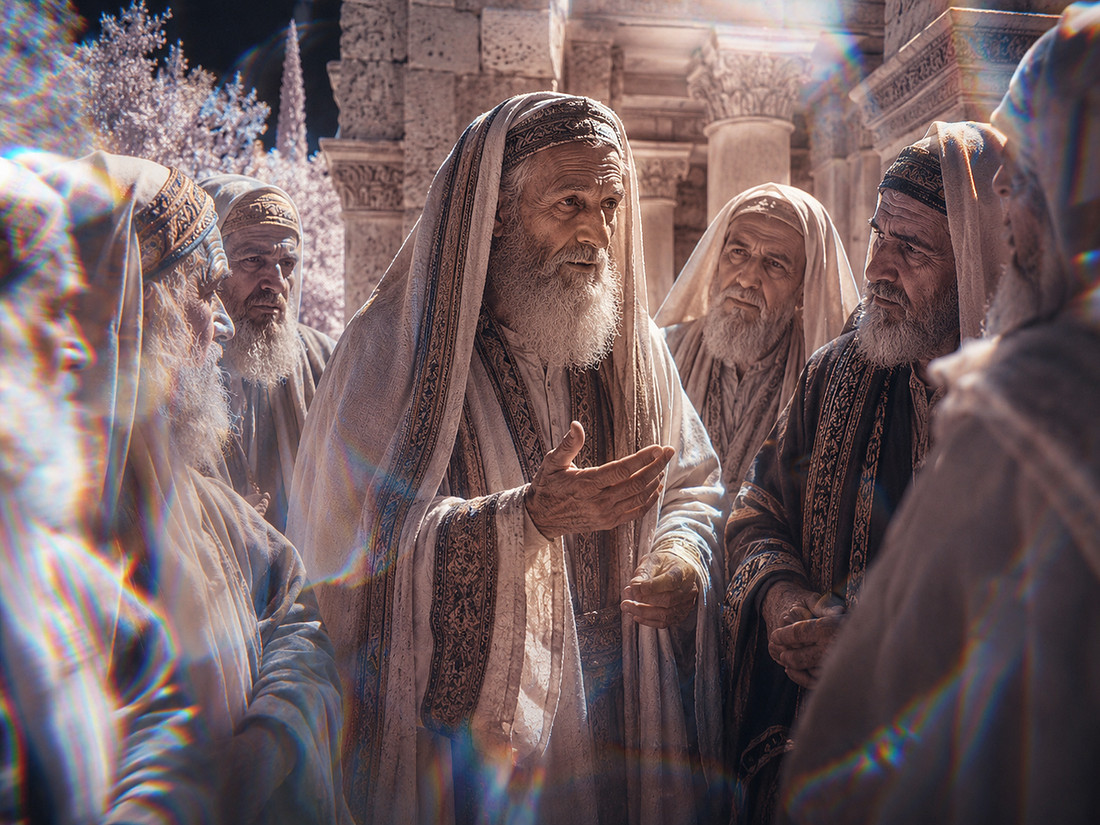

The Message of John Chapter 7
John Chapter 7 shows Jesus exposing the heart of the world.
The world hates Him because He testifies that its works are evil.
The leaders claim Moses but break the Law by seeking to kill the One Moses pointed toward.
The people judge by appearance and partial knowledge.
The officers hear Jesus and are amazed.
Nicodemus asks for lawful judgment.
The Pharisees dismiss what they do not want to receive.
And Jesus cries out to the thirsty:
Come to Me and drink.
From a Christian Reformed lens, John 7 shows both human blindness and divine grace.
Apart from grace, people misjudge Christ.
They see His earthly appearance but miss His heavenly origin.
They hear His words but resist His authority.
They claim Scripture but reject the One Scripture reveals.
But Christ still stands and calls.
If anyone thirsts, let him come to Him.
The answer to spiritual thirst is not pride, religious status, or surface judgment.
The answer is Christ.
He gives the Spirit.
He gives living water.
And those who come to Him will never be left dry.