Matthew Chapter 7: The Narrow Way and the House Built on the Rock

Matthew Chapter 7 finishes the Sermon on the Mount.
In Matthew Ch5, Jesus taught that kingdom righteousness goes deeper than outward behavior. In Matthew Ch6, He taught His disciples to live before the Father rather than for human praise, money, or anxiety.
Now in Matthew 7, Jesus presses the sermon toward decision.
How do we judge others? How do we pray? How do we treat our neighbor? Which road are we walking? What kind of fruit is our life producing? Are we truly known by Christ? What foundation are we building on?
This chapter is not soft moral advice. It is a serious call to real faith.
Judging Others
Jesus begins:
“Judge not, that you be not judged.”
This does not mean Christians can never say anything is right or wrong. Jesus Himself teaches right and wrong throughout the Sermon on the Mount. The warning is against proud, hypocritical, self-blind judgment.
Jesus gives the picture of a person trying to remove a speck from his brother’s eye while he has a log in his own eye. That is almost humorous, but also painful. We often see small faults in others while ignoring larger sins in ourselves.
Jesus is not saying sin does not matter. He is saying we must deal honestly with our own sin before trying to correct someone else.
From a Christian Reformed lens, grace should make us humble. If I know I am saved only by mercy, then I should not approach others with a spirit of pride or contempt.
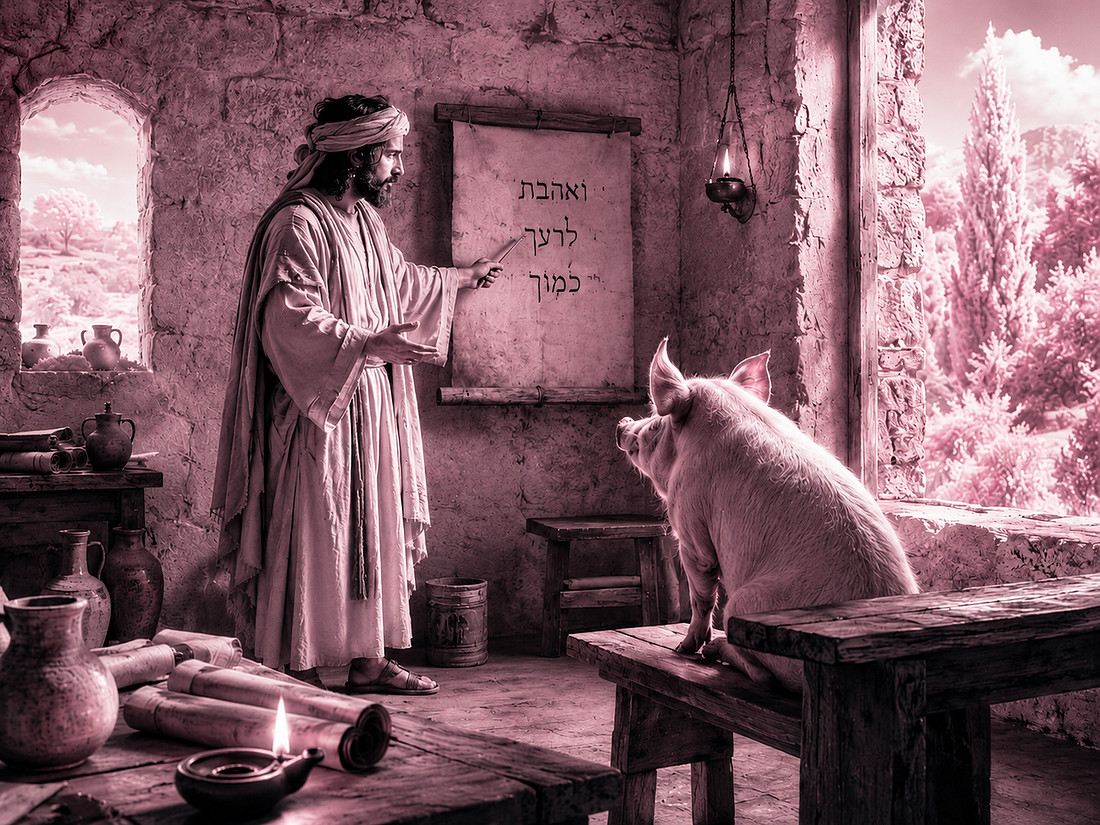
Pearls Before Swine
Then Jesus says not to give dogs what is holy, and not to throw pearls before pigs, lest they trample them underfoot and turn to attack you.
This can sound strange.
Jesus is not calling people animals in a careless or cruel way. He is using a strong picture to teach discernment. Pearls are valuable, but pigs do not understand their value. If someone throws pearls to pigs, the pigs may trample them because they see no worth in them. Then, frustrated or aggressive, they may turn and attack the person who threw them.
The point is that holy truth should not be treated carelessly before those who are only mocking, hostile, or contemptuous.
This does not mean we stop sharing the Gospel with sinners. Jesus Himself eats with tax collectors and sinners, as we saw in Luke Ch5. But there is a difference between a sinner who needs mercy and a person who only wants to mock, twist, and attack what is holy.
Jesus is teaching wisdom.
We should be generous with truth, but not foolish with sacred things.

Ask, Seek, Knock
Jesus then says to ask, seek, and knock.
This is an invitation to pray with confidence. God is not a cruel Father. If earthly fathers, though sinful, know how to give good gifts to their children, how much more will our Father in heaven give good things to those who ask Him?
This does not mean God gives every sinful desire or every exact request. Jesus is not teaching a blank check for selfish wants. He is teaching us to trust the goodness of the Father.
This connects back to Matthew Ch6, where Jesus says the Father knows what we need. Prayer is not manipulation. Prayer is coming to the Father who sees, knows, and provides.
The Golden Rule
Jesus then says:
“Whatever you wish that others would do to you, do also to them.”
This is often called the Golden Rule.
Then Jesus says:
“For this is the Law and the Prophets.”
That means this command summarizes the ethical heart of the Old Testament. The Law and the Prophets taught love for God and love for neighbor. Jesus is not saying this one sentence replaces all Scripture. He is saying that the way we treat others should reflect the whole direction of God’s moral will.
In simple terms, do not only ask, “What can I get from others?” Ask, “How would I want to be treated if I were in their place?”
This fits with Luke Ch6, where Jesus teaches mercy, love for enemies, and the measure we use toward others.
The Golden Rule is not sentimental niceness. It is kingdom righteousness applied to daily life.
The Narrow Gate
Jesus then says to enter by the narrow gate.
The gate is wide and the way is easy that leads to destruction, and many enter by it. The gate is narrow and the way is hard that leads to life, and those who find it are few.
At first, this can feel discouraging. If few find the narrow way, someone might wonder, “Then what is the hope?”
But the encouragement is that Jesus is telling us the truth and showing us the way.
He does not hide the danger.
He does not flatter the crowd.
He does not say the broad road is safe just because many people are walking on it.
The narrow way is not about earning salvation by being impressive. It is the way of coming to Christ, trusting Him, repenting of sin, and following Him. It is narrow because Christ is not one option among many. He is the way of life.
The encouragement is that the narrow gate is open.
Jesus is warning us because He is merciful.
He is not trying to discourage sinners from coming. He is warning us not to drift with the crowd into destruction.
From a Reformed lens, the fact that the way is narrow should not make us give up. It should make us cling to Christ. The same Jesus who warns about the narrow gate also says to ask, seek, and knock. He calls sinners to come, and He is able to save.
A Tree and Its Fruit
Jesus warns about false prophets who come in sheep’s clothing but inwardly are ravenous wolves.
Then He says:
“You will recognize them by their fruits.”
Fruit reveals the tree.
A healthy tree bears good fruit. A diseased tree bears bad fruit.
This does not mean people are saved because their fruit is perfect. Christians still struggle with sin. But the fruit of a life matters. Teaching, character, repentance, humility, truth, mercy, and obedience all reveal what kind of tree we are looking at.
This connects with Luke Ch6, where Jesus says that out of the abundance of the heart the mouth speaks. The heart eventually shows itself.
From a Christian Reformed lens, fruit does not create the root. Grace does. But where grace has truly taken root, fruit begins to grow.
I Never Knew You
Then Jesus gives one of the strongest warnings in the Sermon on the Mount.
Some will say to Him:
“Lord, Lord, did we not prophesy in your name, and cast out demons in your name, and do many mighty works in your name?”
At first glance, this can sound confusing. These people are saying they did religious things in Jesus’ name. That might seem good. So why does Jesus reject them?
The key is that they are not coming to Jesus with empty hands, trusting His mercy. They are presenting their works as their claim.
They say, “Did we not do this? Did we not do that?”
But Jesus says:
“I never knew you; depart from me, you workers of lawlessness.”
That means their outward religious activity did not come from true union with Christ. Jesus is not saying He lacked information about them. He is saying He never knew them in a saving, covenantal way. They did not truly belong to Him.
They may have used His name.
They may have done impressive things.
They may have appeared spiritual.
But they were workers of lawlessness.
That phrase matters. Jesus is not describing weak believers who hate their sin, repent, and cling to Him for mercy. He is describing people whose lives remained fundamentally opposed to His rule even while they claimed His name.
This is not a picture of a sinner crying, “Lord, save me; I have no hope but You.”
This is a picture of people saying, “Lord, accept me because of what I did in Your name.”
That is very different.
The warning is serious: religious activity cannot replace knowing Christ. Public ministry cannot replace repentance. Spiritual language cannot replace obedience. A person can say “Lord, Lord” and still not submit to Jesus as Lord.
This also helps explain Judas in John Ch6. Judas was near Jesus outwardly, heard the teaching, and walked with the Twelve, but his heart did not belong to Christ.
Matthew 7 warns us not to rest in religious appearance.
We need Christ Himself.
Build Your House on the Rock
Jesus ends the sermon with two houses.
One man hears Jesus’ words and does them. He is like a wise man who builds his house on the rock. The rain falls, the floods come, the winds blow, but the house stands.
Another man hears Jesus’ words and does not do them. He is like a foolish man who builds on sand. The same storm comes, but the house falls.
Both men hear.
Both houses face the storm.
The difference is the foundation.
Jesus is not teaching salvation by self-effort. He is teaching that true faith hears Him and follows Him. Obedience is not the root of salvation, but it is the fruit of a real faith.
The sermon ends by asking: what are we building on?
Human praise?
Religious works?
Comfort?
Self-rule?
The crowd?
Or Christ and His Word?
The Message of Matthew Chapter 7
Matthew Chapter 7 brings the Sermon on the Mount to a searching conclusion.
Jesus warns against hypocritical judgment.
He teaches discernment with holy things.
He invites His disciples to ask, seek, and knock.
He summarizes the Law and the Prophets in the Golden Rule.
He warns that the gate to life is narrow.
He says false prophets are known by their fruit.
He warns that saying “Lord, Lord” is not the same as truly belonging to Him.
He calls us to build on the rock.
From a Christian Reformed lens, Matthew 7 shows that true faith is more than words, appearances, or impressive religious activity.
We are saved by grace alone through faith alone in Christ alone.
But the faith that receives Christ does not remain empty.
It bears fruit.
It repents.
It listens.
It builds on Christ’s Word.
The narrow gate should not make us stop being Christian.
It should make us stop trusting the broad road.
Christ is the way of life.
The gate is narrow, but it is open.
And the house built on Him will stand.