John Chapter 13: The Servant Who Cleanses His People


John Chapter 13 begins the final night before the cross.
In John Ch12, Jesus said His hour had come. Mary anointed Him for burial, the crowds welcomed Him as King, and Jesus spoke of the grain of wheat falling into the earth and dying.
Now, in John 13, the King kneels.
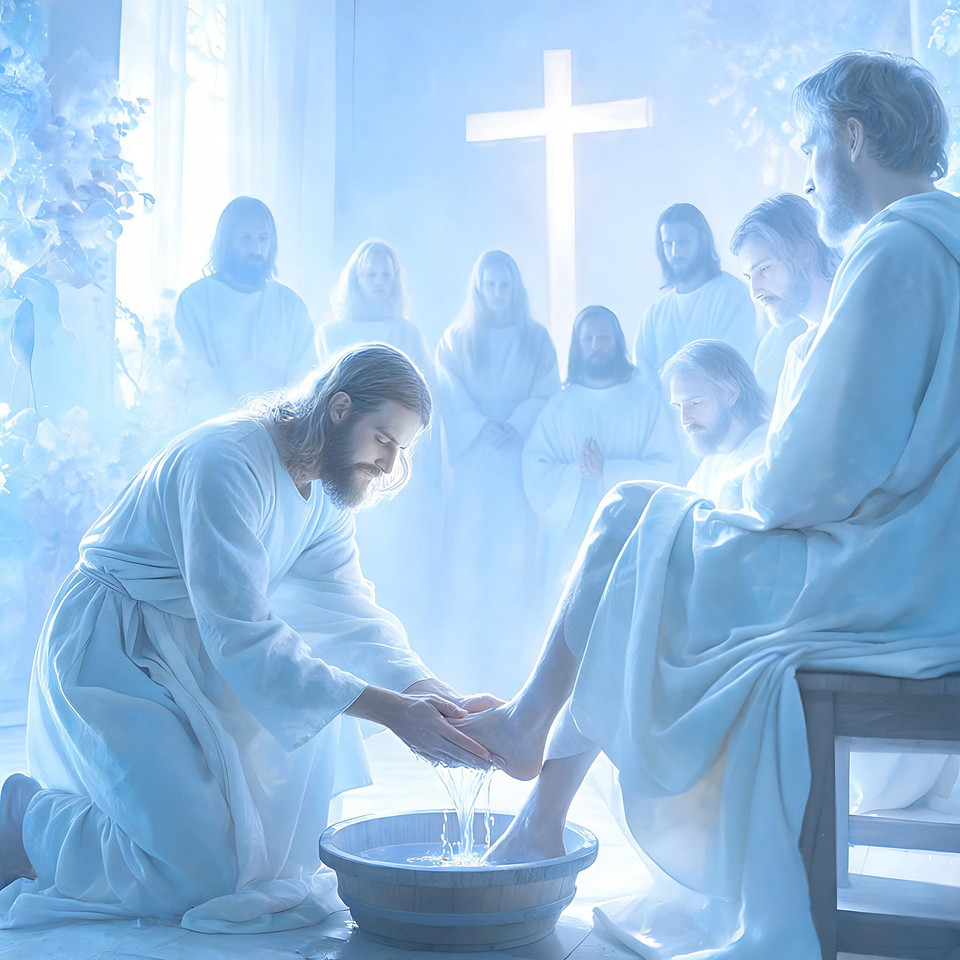
Jesus washes His disciples’ feet.
This is not only an example of humility. It is a sign of the cleansing His people need from Him. The Lord takes the servant’s place because sinners cannot wash themselves clean before God.
Jesus Washes the Disciples’ Feet
John begins by saying that Jesus loved His own who were in the world, and He loved them to the end.
That sets the tone.
Jesus knows the cross is near. He knows Judas will betray Him. He knows Peter will deny Him. He knows the disciples are weak, confused, and still proud in many ways. Yet He loves His own to the end.
Then Jesus rises from supper, lays aside His outer garments, takes a towel, and begins washing the disciples’ feet.
This is shocking.
The One through whom all things were made kneels before dusty feet.
The Teacher becomes the servant.
The Lord humbles Himself.
This connects with Mark Ch10, where Jesus said the Son of Man came not to be served, but to serve, and to give His life as a ransom for many.
The foot washing points to that greater service.
Jesus does not merely clean dirt.
He is showing that His people need to be cleansed by Him.
Peter does not understand and says Jesus will never wash his feet. Jesus answers, “If I do not wash you, you have no share with me.”
That is the heart of the scene.
Unless Christ washes us, we do not belong to Him.
From a Christian Reformed lens, this is grace. We are not self-cleansing people. We do not make ourselves pure enough for Christ. Christ stoops to cleanse us. His humility is not weakness. It is saving love.
Peter then swings too far the other way and asks for his hands and head also. Jesus says the one who has bathed does not need to wash except for his feet, but is completely clean. Then He adds, “But not every one of you.”
That points to Judas.
The disciples are outwardly gathered around Jesus, but not all are clean.
Again, John reminds us that outward nearness is not the same as saving faith. We saw this in John Ch6, where Judas was near the Bread of Life but did not truly receive Him.
You Also Ought to Wash One Another’s Feet
After washing their feet, Jesus explains what He has done.
If He, the Lord and Teacher, washed their feet, they also ought to wash one another’s feet.
Jesus is not merely giving a ritual. He is teaching the shape of Christian love.
Those cleansed by Christ become servants of others.
Grace does not make us proud. It lowers us. It teaches us to love in practical, humble, costly ways.
The church should not be a place where everyone seeks status. It should be a people shaped by the towel and basin of Christ.
But we must keep the order right.
We do not serve in order to cleanse ourselves.
We serve because Christ has cleansed us.
One of You Will Betray Me
Jesus then becomes troubled in spirit and says that one of them will betray Him.
The disciples are uncertain and look at one another.
Jesus identifies Judas by giving him the morsel, and after Judas takes it, Satan enters into him. Judas goes out, and John says, “And it was night.”
That is more than time of day.
It is spiritual darkness.
Judas had walked with Jesus. He had heard the teaching. He had seen the signs. He was at the table. He even had his feet washed outwardly. Yet his heart did not belong to Christ.
This is a sober warning.
Religious closeness cannot save.
Only Christ can.
The darkness of Judas also shows the mercy of Jesus more clearly. Jesus knows the betrayal and still moves toward the cross. Human evil does not surprise Him. Satan’s work does not overthrow Him. The Son lays down His life willingly.
That connects with John Ch10, where Jesus said no one takes His life from Him. He lays it down of His own accord.
A New Commandment
After Judas leaves, Jesus speaks of glory.
That may seem strange, because betrayal and death are coming. But in John’s Gospel, the cross is the place where the Son is glorified. The love, holiness, justice, mercy, and obedience of God are displayed there.
Then Jesus gives a new commandment:
Love one another as He has loved them.
The standard is not vague kindness.
The standard is Christ’s own love.
He has loved them with humble service. He has loved them with patience. He will love them by going to the cross.
By this love, all people will know they are His disciples.
Christian love is not the root of salvation. Christ is. But love is the mark of those who belong to Him.
A loveless Christianity contradicts the towel, the basin, and the cross.
Jesus Foretells Peter’s Denial
Peter asks where Jesus is going and says he will lay down his life for Him.
Peter likely means it sincerely.
But Jesus tells him that before the rooster crows, Peter will deny Him three times.
That is humbling.
Peter thinks he is stronger than he is.
He imagines himself ready for martyrdom, but he will soon be afraid before human questioning.
Still, this is not the end of Peter’s story. Jesus already knows Peter’s failure before it happens, and He will restore him later.
That is comfort for weak believers.
Christ’s knowledge of our weakness does not destroy His love for His own.
He loves them to the end.
The Message of John Chapter 13
John Chapter 13 shows Jesus as the Servant-Lord who cleanses His people.
He kneels before the disciples.
He washes their feet.
He exposes Judas.
He commands His people to love one another.
He warns Peter of his coming denial.
And He moves toward the cross with full knowledge and love.
This chapter reminds us that we need more than an example.
We need cleansing.
Jesus does give us an example of humble service, but first He gives Himself as the Savior who washes sinners clean.
From a Christian Reformed lens, this is the order of grace.
Christ stoops first.
Christ washes first.
Christ loves first.
Then His people serve, forgive, love, and humble themselves toward one another.
John 13 calls us to receive the cleansing only Jesus can give, to beware of outward closeness without true faith, and to love others with the humble love of Christ.
The Lord of glory took the towel.
The Teacher knelt.
The Savior washed.
And the cross was already in view.