Mark Chapter 9: Glory, Unbelief, and the Way of the Cross

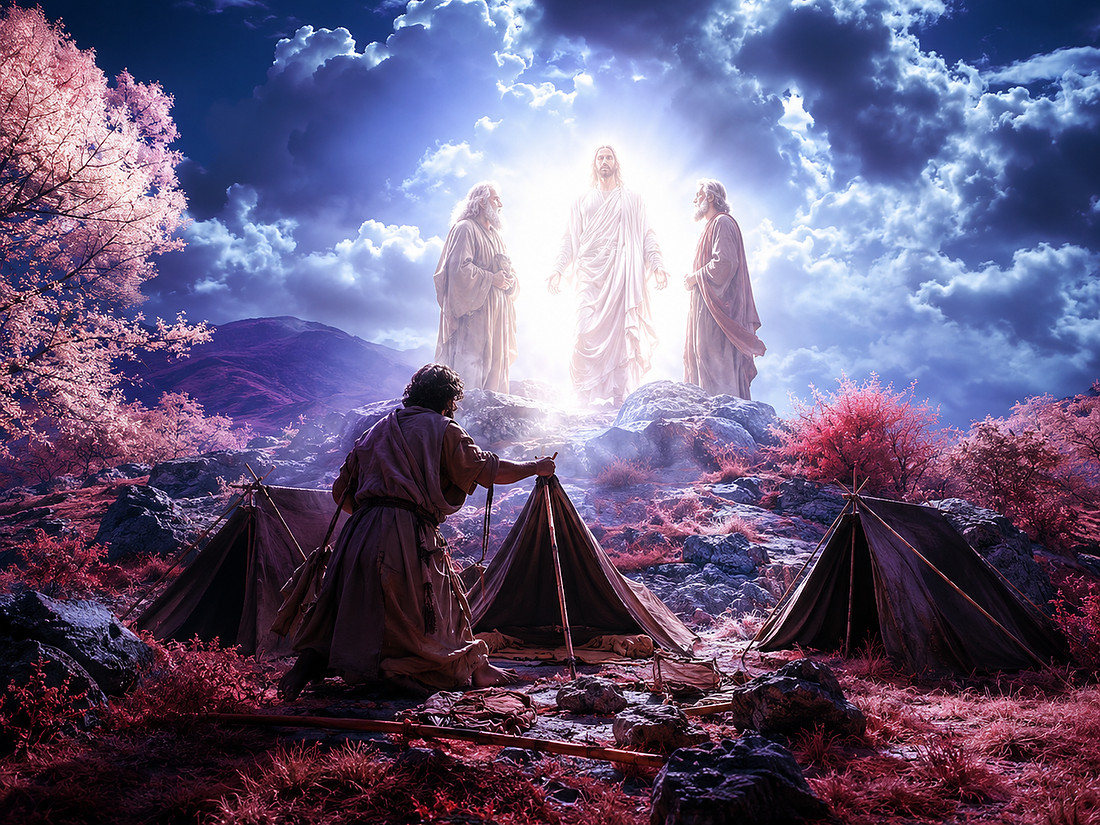

Mark Chapter 9 begins with glory and ends with warning.
Jesus is transfigured before Peter, James, and John. A desperate father brings his demon-oppressed son to Jesus. The disciples argue about greatness. Jesus teaches them to receive the lowly, cut off sin, and live as people shaped by the kingdom.
This chapter continues the lesson of Mark Ch8. Peter had confessed that Jesus is the Christ, but he did not yet understand the cross. In Mark 9, the glory of Jesus is revealed, but Jesus still keeps teaching that the Son of Man must suffer, die, and rise.
The disciples need to see both.
Christ is glorious.
And Christ goes to the cross.
The Transfiguration
Jesus takes Peter, James, and John up a high mountain, and He is transfigured before them. His clothes become radiant, intensely white, in a way no earthly bleach could produce.
Moses and Elijah appear with Him.
That matters.
Moses represents the Law, and Elijah represents the prophets. Both stand with Jesus, but Jesus is not merely one figure among them. The cloud comes, and the Father’s voice says, “This is my beloved Son; listen to him.”
That is the center of the scene.
Listen to Him.
In John Ch1, John says the Word became flesh and dwelt among us, and we have seen His glory. On the mountain, Peter, James, and John receive a glimpse of that glory. The eternal Son stands before them in majesty.
Peter does not know what to say. He suggests making three tents, one for Jesus, one for Moses, and one for Elijah. But the Father does not put Jesus on equal footing with Moses and Elijah. The voice from the cloud singles out the Son.
The Law and the Prophets point to Him.
Jesus fulfills them.
Therefore, listen to Him.
Elijah and the Son of Man
As they come down the mountain, Jesus tells them not to tell anyone what they have seen until the Son of Man has risen from the dead.
They keep the matter to themselves, but they question what rising from the dead might mean.
That is striking. They have seen glory, but they still do not understand resurrection. They are still learning to see clearly.
They ask about Elijah, because the scribes taught that Elijah must come first. Jesus says Elijah does come first to restore all things, but He also points them to the suffering of the Son of Man. In some sense, John the Baptist came in the spirit and power of Elijah, preparing the way, and they did to him whatever they pleased.
The pattern is already there.
The forerunner suffers.
The Son of Man will suffer.
The glory of the mountain does not cancel the cross. It confirms who Jesus is as He goes toward the cross.
Lord, I Believe; Help My Unbelief
When Jesus comes down, He finds a crowd, scribes arguing, and a desperate father whose son is oppressed by an unclean spirit.
The boy suffers terribly. The spirit throws him down, makes him foam, grind his teeth, and become rigid. The father brought him to the disciples, but they could not cast it out.
Jesus grieves the unbelief around Him and asks that the boy be brought to Him.
The father says, “If you can do anything, have compassion on us and help us.”
Jesus answers, “If you can! All things are possible for one who believes.”
Then the father cries out:
“I believe; help my unbelief!”
That is one of the most honest prayers in Scripture.
It is not polished.
It is not proud.
It is faith mixed with weakness, desperation, and need.
From a Christian Reformed lens, this is comforting. Faith is not confidence in the strength of our own faith. Faith looks to Christ. Weak faith, if it is true faith, still looks to a strong Savior.
This man does not come pretending he has no struggle.
He comes to Jesus with both belief and unbelief.
And Jesus helps.
This connects with Mark Ch3, where Jesus showed His authority over demons and warned against hardened hearts that call the work of God evil. In Mark 9, the father is not hardened like that. He is weak, but he comes to Christ for mercy.
Jesus rebukes the unclean spirit, commands it never to enter the boy again, and the boy is delivered.
Later, the disciples ask why they could not cast it out. Jesus says, “This kind cannot be driven out by anything but prayer.”
The point is dependence.
The disciples cannot treat ministry as technique or habit. They need God. They need prayer. They need reliance on the Lord, not confidence in themselves.
The Son of Man Will Be Delivered
Jesus again teaches His disciples that the Son of Man will be delivered into the hands of men, and they will kill Him, and after He is killed He will rise.
But they do not understand, and they are afraid to ask.
That fear is understandable, but it also shows their immaturity. Jesus is speaking plainly, yet they still struggle to receive the way of the cross.
This is the same problem from Mark Ch8. They want glory, but they do not yet understand suffering. They know Jesus is the Christ, but they do not yet understand that the Christ must be crucified.
Who Is the Greatest?
Then the disciples argue about who is the greatest.
That is painful timing.
Jesus has just spoken about being delivered, killed, and raised. The disciples are discussing status.
So Jesus sits down, calls the twelve, and says, “If anyone would be first, he must be last of all and servant of all.”
Then He takes a child and places him among them. In that world, a child had no worldly status to offer. Jesus teaches that receiving such a child in His name is receiving Him, and receiving Him is receiving the One who sent Him.
This connects with Matthew Ch5, where kingdom life does not look like worldly greatness. The kingdom belongs to the poor in spirit, the meek, the merciful, and the persecuted. In Mark 9, Jesus teaches the same reversal.
Greatness in Christ’s kingdom is not self-exaltation.
It is humble service.
Whoever Is Not Against Us Is for Us
John then tells Jesus that they saw someone casting out demons in His name, and they tried to stop him because he was not following them.
Jesus tells them not to stop him.
This does not mean doctrine does not matter, or that anyone can do anything in Jesus’ name without concern. But in this case, the man is not opposing Jesus. The disciples are too quick to protect their own group boundary.
Jesus says, “The one who is not against us is for us.”
They need humility.
They need discernment.
Not everyone outside their immediate circle is an enemy.
That is a helpful warning. Sometimes zeal for Christ can become mixed with pride, control, or suspicion. Jesus teaches His disciples to care more about His name than their own position.
Temptations to Sin
Then Jesus gives severe warnings about causing little ones who believe in Him to sin. It would be better to have a great millstone hung around the neck and be thrown into the sea than to lead one of His little ones into sin.
That is strong language.
Jesus takes spiritual harm seriously.
He then speaks about cutting off hand, foot, or eye if it causes sin. He is not commanding literal self-mutilation. Sin comes from the heart, and cutting off a body part cannot cleanse the heart.
But He is teaching ruthless seriousness against sin.
Do not make peace with what destroys.
Do not protect what leads away from God.
Do not treat sin casually.
This connects with Matthew Ch7, where Jesus teaches the narrow way and warns that not everyone who says “Lord, Lord” truly belongs to Him. The call of Christ is grace, but grace never teaches us to play with sin.
Jesus speaks of hell with sobering seriousness. That does not make Him cruel. It shows that He tells the truth. The Savior who welcomes children, receives the lowly, and helps weak faith also warns sinners about judgment.
Mercy and warning belong together.
Salted with Fire
The chapter ends with Jesus saying that everyone will be salted with fire, and that salt is good, but if salt loses its saltiness, how will it be made salty again?
This is a difficult saying, but the main direction is clear. Fire often speaks of testing, purification, or judgment. Salt preserves and marks distinctness. Jesus is calling His disciples to lives purified by God, distinct from the corruption of sin, and at peace with one another.
They had been arguing about greatness.
Jesus ends by saying, “Have salt in yourselves, and be at peace with one another.”
That is a fitting conclusion.
The disciples do not need more pride.
They need purity, humility, dependence, and peace.
The Message of Mark Chapter 9
Mark Chapter 9 shows Jesus in glory, but it keeps us on the road to the cross.
The Father says, “This is my beloved Son; listen to him.”
The desperate father cries, “I believe; help my unbelief.”
Jesus delivers the oppressed boy.
The disciples learn that ministry requires prayerful dependence.
Jesus again teaches that He will be killed and rise.
The disciples argue about greatness, and Jesus teaches them to become servants.
He warns them not to cause little ones to stumble.
He tells them to deal seriously with sin.
And He calls them to peace.
From a Christian Reformed lens, this chapter humbles us. We are often like the disciples: slow to understand, tempted by status, weak in prayer, and confused about the cross.
But Christ is patient and powerful.
He reveals His glory.
He helps weak faith.
He delivers from evil.
He teaches the way of the cross.
And He calls His people away from pride and sin into humble service.
Mark 9 teaches us to listen to the beloved Son.
Not merely admire Him.
Not merely see His glory from a distance.
Listen to Him.
Follow Him.
Depend on Him.
And receive His mercy, even when the best prayer we can offer is:
“I believe; help my unbelief.”