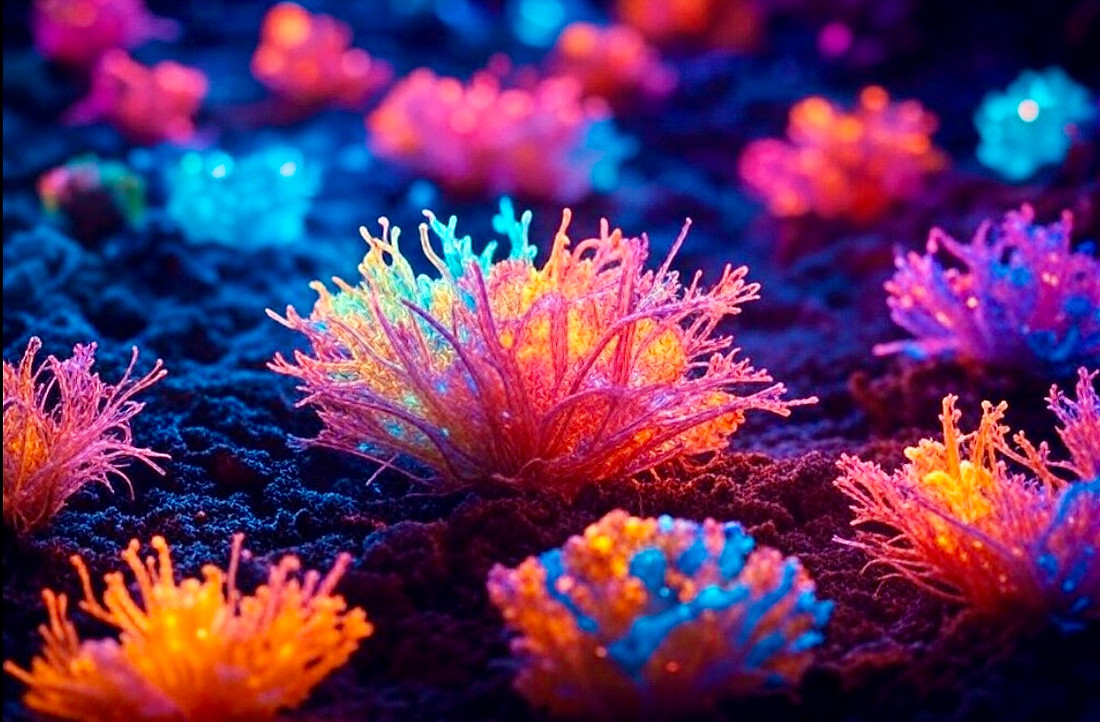
Illuminating the Invisible: Turning Microscopic Worlds into Inspiring Art

Let's delve into the art of revealing the unseen, where the microscopic becomes a canvas for inspiration.
1. A World Beneath Notice
Microscopic worlds are teeming with color, texture, and form, hidden from everyday view. Consider the orderly patterns of an onion cell, which under magnification resemble a meticulously structured honeycomb, hinting at a silent, intricate society.
2. The Art of Scientific Observation
To explore these hidden realms, one needs the right tools:
-
Magnification Mastery: The level of magnification should suit the subject. A water droplet reveals life at modest levels, while crystals or pollen grains require more powerful lenses.
-
Light and Shadow: The way light interacts with your subject can dramatically alter your findings. Side lighting can accentuate textures, while direct light might focus on color. A slight tilt of the specimen can reveal new dimensions.
-
Discreet Methodology: Handle your exploration with subtlety to maintain the integrity and mystery of your subjects.
3. From Microcosm to Macro Art
Here's how to turn microscopic observations into art:
-
Inspire with Colour: Draw from the iridescence seen in mineral slices or the shimmer of soap bubbles. Capture the play of light on these surfaces for unique color palettes.
-
Patterns and Geometry: Use the natural patterns like those in leaf veins or pollen symmetry to inspire new artistic motifs or designs.
-
Conceptual Art: Infuse your art with the wonder of exploring what's typically unseen, creating pieces that invite curiosity.
4. The Artist's Journey with the Microscope
The process from observation to art:
-
Capture: Choose an everyday item for scrutiny. Document the microscopic details through photography or sketches, focusing on unique features.
-
Conceptualise: Translate these observations into broader artistic designs. Perhaps use cellular patterns or light behavior as thematic elements.
-
Create: Synthesize these elements into your final artwork, emphasizing what initially captivated you.
5. A Small Adventure for the Curious
If you're intrigued to explore:
-
Start with the ordinary - a leaf, dust, or water droplet.
-
Use magnification tools discreetly to delve into their secrets.
-
Adjust lighting and angles to see the subject from new perspectives.
-
Keep your discoveries confidential; they might inspire future works.
6. Reflections on the Art-Science Nexus
Exploring these hidden worlds reveals nature's elegance in the smallest scales, reminding us that even the most minute elements contribute to a larger design, visible only to the observant.
 IMG_4648
Comments
|
January
February
March
April
May
June
July
August
September
October
(1)
November (1)
(3)
December (3)
|
January
(1)
February (1)
(1)
March (1)
April
May
(1)
June (1)
July
(2)
August (2)
(1)
September (1)
(3)
October (3)
November
December
|
January
February
March
April
May
June
July
August
September
October
November
December
|
January
February
(1)
March (1)
April
May
June
July
August
September
(3)
October (3)
(7)
November (7)
(2)
December (2)
|
(3)
January (3)
February
March
April
(1)
May (1)
June
(1)
July (1)
August
September
(2)
October (2)
(2)
November (2)
(1)
December (1)
|
January
(2)
February (2)
March
(1)
April (1)
May
June
July
August
September
October
November
(1)
December (1)
|
January
February
March
April
May
June
July
August
September
(4)
October (4)
(44)
November (44)
(30)
December (30)
|
(15)
January (15)
(8)
February (8)
(2)
March (2)
April
May
(3)
June (3)
(1)
July (1)
August
September
October
November
(6)
December (6)
|
January
(3)
February (3)
(4)
March (4)
(42)
April (42)
(1)
May (1)
June
(1)
July (1)
(1)
August (1)
September
(1)
October (1)
(1)
November (1)
(23)
December (23)
|
(6)
January (6)
(9)
February (9)
(2)
March (2)
(12)
April (12)
(4)
May (4)
(4)
June (4)
(8)
July (8)
(15)
August (15)
(6)
September (6)
(3)
October (3)
(1)
November (1)
(1)
December (1)
|
January
(1)
February (1)
March
(1)
April (1)
(17)
May (17)
(21)
June (21)
(88)
July (88)
August
September
October
November
December
|