Matthew Chapter 17: Glory, Faith, and the Son Who Pays the Tax

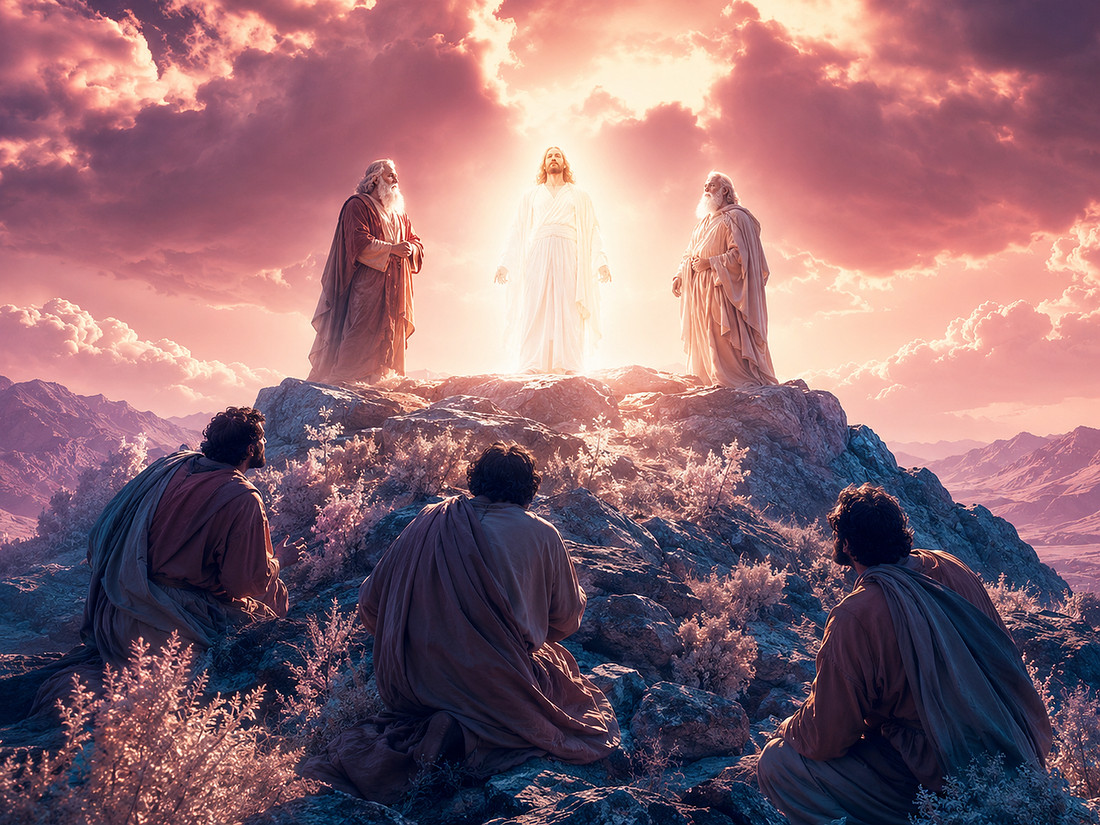

Matthew Chapter 17 begins with glory on a mountain and ends with Jesus humbling Himself in a very ordinary way.
In Matthew Ch16, Peter confessed that Jesus is the Christ, the Son of the living God. Jesus then began to teach that He must suffer, die, and rise again. Now, in Matthew 17, the disciples are given a glimpse of His glory before the road to the cross continues.
The chapter shows us who Jesus is.
He is the beloved Son.
He is greater than Moses and Elijah.
He is the Lord who heals.
He is the Son who will suffer.
And He is the King who humbles Himself.
The Transfiguration
Jesus takes Peter, James, and John up a high mountain. There He is transfigured before them. His face shines like the sun, and His clothes become white as light.
Moses and Elijah appear, talking with Him.
This is not random. Moses represents the Law, and Elijah represents the Prophets. Together they point to Christ. Jesus is not merely another messenger in the line. He is the fulfillment of all God had spoken.
Peter wants to make three tents: one for Jesus, one for Moses, and one for Elijah.
But while he is still speaking, a bright cloud overshadows them, and the Father says, “This is my beloved Son, with whom I am well pleased; listen to him.”
That is the center of the scene.
Listen to Him.
When the disciples lift their eyes, they see no one but Jesus only.
That is the message.
The Law and the Prophets bear witness to Him.
The Father delights in Him.
The disciples must listen to Him.
Jesus alone is the beloved Son.
Do Not Be Afraid
The disciples fall on their faces, terrified.
Jesus comes and touches them, saying, “Rise, and have no fear.”
That is beautiful.
The same Jesus who shines in divine glory also draws near to fearful disciples.
He does not crush them.
He comforts them.
The glory of Christ should humble us, but it should not drive His people into hopeless terror. The glorious Son is also the merciful Savior.
From a Christian Reformed lens, this matters. We do not come to God by climbing into glory through our own strength. Christ comes to us. He reveals Himself. He saves. He raises fearful sinners by grace.
Elijah Has Come
As they come down the mountain, the disciples ask about Elijah.
Jesus explains that Elijah has already come, and they did not recognize him. Then the disciples understand He is speaking about John the Baptist.
John came in the spirit and power of Elijah, preparing the way for the Lord. Yet he was rejected and killed. Jesus says the Son of Man will also suffer at their hands.
So even after the glory of the mountain, the cross remains in view.
Matthew 17 does not let us separate glory from suffering.
The beloved Son will be rejected.
The shining Christ will be crucified.
Faith and the Demon-Oppressed Boy
When Jesus comes down from the mountain, a man kneels before Him and asks mercy for his son, who suffers terribly. The disciples had tried to heal him but could not.
Jesus rebukes the demon, and the boy is healed instantly.
The disciples ask why they could not cast it out. Jesus points to their little faith.
The point is not that faith is a technique. Faith is dependence on God. Even faith like a mustard seed rests not in its own size, but in the power of the Lord.
This connects with Matthew Ch13, where the mustard seed showed the surprising growth of the kingdom. Here, mustard-seed faith shows that what matters is not human strength, but the God in whom faith rests.
The disciples were powerless in themselves.
Jesus was not.
The Son Will Be Delivered Up
Jesus again tells His disciples that the Son of Man will be delivered into the hands of men, killed, and raised on the third day.
They are greatly distressed.
They hear the suffering and death, but they do not seem to understand the resurrection yet.
That is often how weak faith works. We hear the dark part clearly and struggle to hold onto the promise.
But Jesus is not guessing.
He knows the road ahead.
The cross will not be an accident. The resurrection will not be an afterthought. The Son of Man will be delivered up, killed, and raised.
The Temple Tax
At the end of the chapter, those who collect the temple tax ask Peter whether Jesus pays it.
Jesus explains that sons are free. As the Son of God, He is not under obligation in the same way.
Yet He tells Peter to pay the tax so they do not give offense.
This is a quiet but powerful moment.
The glorious Son on the mountain humbles Himself in daily life. He does not use His freedom selfishly. He willingly lays aside His rights.
Even the miracle of the coin in the fish’s mouth shows His authority over creation. But He uses that authority in humility.
The Son is free.
Yet He pays.
That points us again toward the Gospel. Jesus owes no debt of sin, yet He will go to the cross and pay what His people could never pay.
The Message of Matthew Chapter 17
Matthew Chapter 17 shows the glory and humility of Christ.
On the mountain, His face shines like the sun.
The Father declares Him the beloved Son.
Moses and Elijah fade from view, and Jesus remains.
At the foot of the mountain, He heals what the disciples could not heal.
On the road, He speaks again of His death and resurrection.
At the end, the free Son pays the tax.
From a Christian Reformed lens, this chapter calls us to look to Christ alone. He is the fulfillment of Scripture, the beloved Son of the Father, the healer of the helpless, the suffering Savior, and the humble King.
The Father’s command still stands:
“Listen to him.”
And when we lift our eyes, the hope of the Gospel is still the same.
Jesus only.